LafayetteSquare
Defending the Republic: The European Heroes of Lafayette Park & the Enduring Necessity of Global Alliances and Immigration in America
An exhibition on the four bronze figures who stand at the corners of a park in front of the White House — Lafayette, Rochambeau, von Steuben, and Kościuszko — and what their presence still says about American democracy.
Begin the Journey
Choose how you would like to enter the exhibit. Each path leads through the others.
Explore the Park
Stand in Lafayette Square. Read the four corner pedestals.
Meet the Four Europeans
Lafayette, Rochambeau, von Steuben, Kościuszko.
Read the Primary Sources
Letters, orders, and resolutions in their own words.
Discover Their Legacy
Monuments, parades, parks, and contested memory.
A park, four allies, two centuries of memory
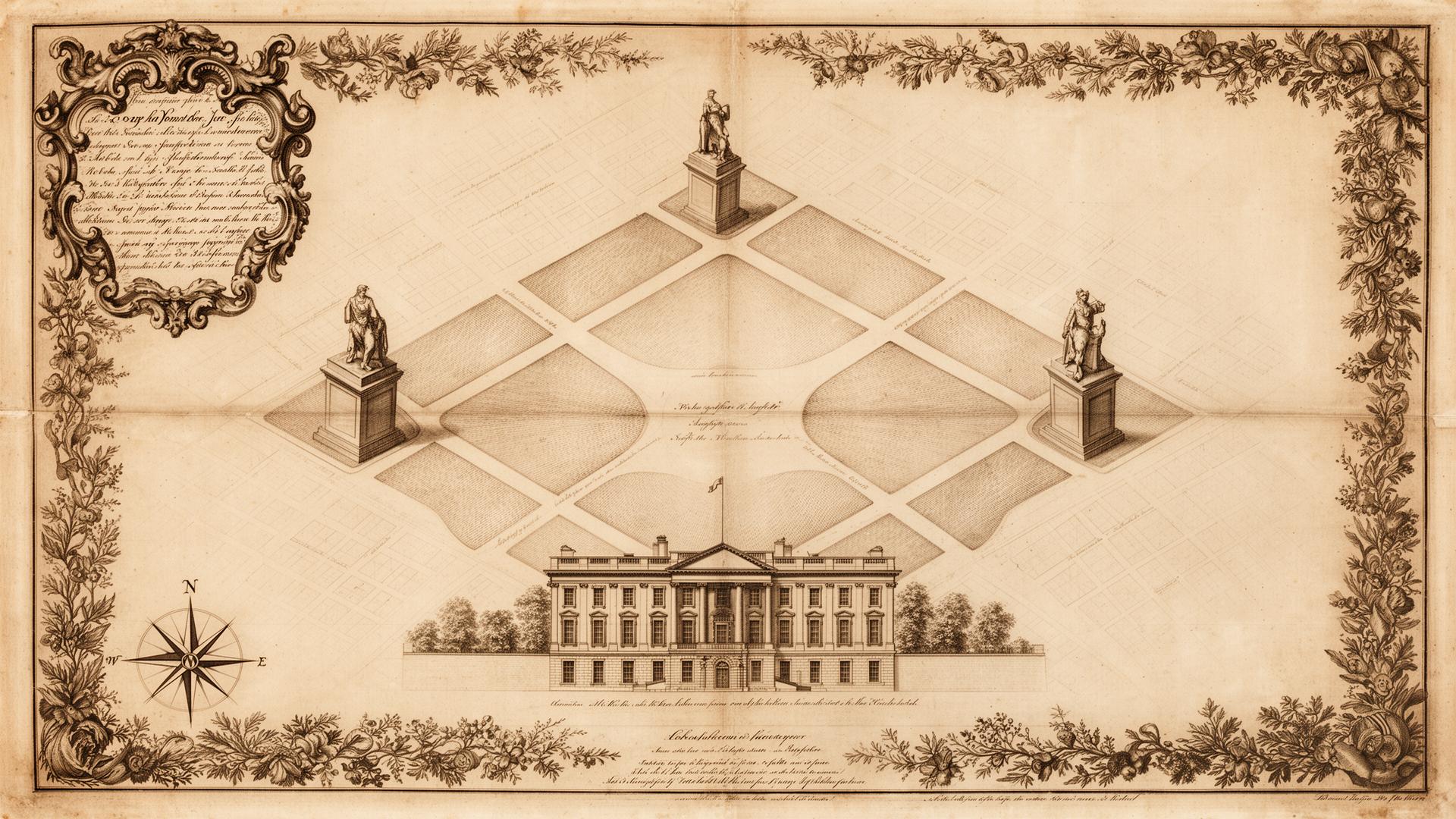
Seven acres across from the President's House
Originally part of the White House grounds, the square was renamed for the Marquis de Lafayette during his triumphal American tour of 1824. By 1910 it had become an open-air pantheon: four bronze Europeans on guard at its corners, an American president framed between them.
This project examines Lafayette Park in Washington, D.C. as a symbolic landscape of transatlantic memory. The statues of Lafayette, Rochambeau, von Steuben, and Kościuszko commemorate European contributions to American independence while also revealing how ideas of liberty, democracy, equality, military professionalism, national belonging, and immigrant legitimacy have been remembered, contested, and repurposed over time.
Cabinet of Allies
A French aristocrat, a Bourbon commander, a Prussian drillmaster, and a Polish engineer — four foreign-born founders cast in bronze.
Lafayette
1757–1834
Alliance, diplomacy, battlefield leadership.
Rochambeau
1725–1807
French army and Yorktown strategy.
von Steuben
1730–1794
Training and military discipline.
Kościuszko
1746–1817
Engineering and fortification.
Five galleries
From the park itself, to its protagonists, sources, commemorations, and the politics of immigrant memory.
Lafayette Square as a memorial landscape
A seven-acre park in front of the White House, framed by four bronze European allies.
The four European protagonists
Lives, battles, and ideas of Lafayette, Rochambeau, von Steuben, and Kościuszko.
Primary sources and transatlantic ideas
Letters, drill manuals, resolutions and political writings that crossed the ocean.
Monuments, art, literature, film, commemoration
How four foreign-born men became American civic icons across two centuries.
Immigrant memory, identity, and the 250th anniversary
Belonging, voting, and the politics of remembering international cooperation.
The United States turns two hundred and fifty.
On July 4, 2026, the United States marks its semiquincentennial. The four bronze statues of European military heroes in Lafayette Square are a reminder that independence was never achieved alone — it was won by an Atlantic coalition of revolutionaries, soldiers, engineers, and exiles. In a moment of intense debate over migration, alliances, and national belonging, their statues remind us to ask the essential question: who counts as a founder?
"Citizens of two worlds."
The Lafayette Square Project · A first stage of forthcoming research, in English and German.